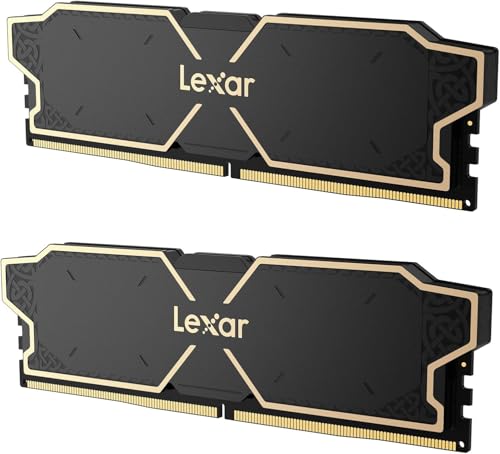
Lexar RGB DDR5 RAM 24GB (1x24GB) UDIMM 6000MHz CL28 For Gaming PC AI
Lexar RGB DDR5 RAM 24GB (1x24GB) UDIMM 6000MHz CL28 For Gaming PC AI is priced at £349.99 — stable over the last 30 days.
Price last checked:
Product prices and availability are accurate as of the date/time indicated and are subject to change. Any price and availability information displayed on Amazon.co.uk at the time of purchase will apply to the purchase of this product.
- Blazing-Fast DDR5 Performance – Built for next-gen systems, achieving 6000MT/s with ultra-low CL28 latency. Supports AMD EXPO standards for effortless overclocking, delivering superior stability and responsiveness.
- Advanced On-Die ECC – Integrated Error Correction Code enhances data integrity and system stability, ensuring smooth, uninterrupted gaming and multitasking.
- Built-In Power Management IC (PMIC) – Optimizes energy efficiency by intelligently managing power distribution, allowing your system to maintain peak performance with reduced power consumption.
- Premium Aluminum Heat Spreader – Features a 1.88mm thick aluminum heatsink designed for maximum heat dissipation. Keeps memory modules cool under pressure for sustained performance during intense gaming sessions.
- Vibrant RGB Lighting – Illuminate your build with customizable RGB lighting via Lexar RGB Sync, supporting dynamic effects and synchronization with other components.
About This Product
Lexar DDR5 DRAM THOR Z OC
Lexar DDR5 DRAM Standard
Lexar DDR4 DRAM Standard
How did Lexar start and evolve?
Lexar has been manufacturing high-end image memory cards for 23 years. Since its inception, Lexar has worked diligently to deliver unparalleled value to our customers. How did Lexar maintain its high quality?
Lexar Quality Labs are a group of test facilities where all memory cards, card readers, USB flash drives, internal SSD, external SSD, DIMM from Lexar undergo extensive testing to ensure performance, quality, compatibility and reliability. Why is the actual available capacity different?
Due to different capacity algorithms, partial capacities are used for system file, management and performance optimization, so the actual available capacity may be less than the identifying capacity.